
How is the price of pallet transport calculated?
The cost of shipping a pallet depends on:
- First, the pick-up and delivery locations
- Next, the dimensions: length, width, height
- Then, the weight of your goods
- In addition, the type of transport: air, road or sea
- Finally, the options chosen: insurance, need for a tail lift and pallet truck, etc.
Looking for a carrier to handle your pallet shipments? Receive quotes from carriers directly by email! Simply fill in a free quote request via our form and receive rates for your pallet shipment within the day!
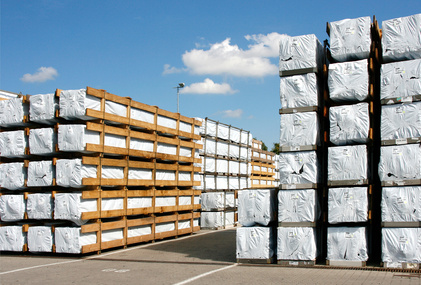
What pallet sizes are there?
There are several standard pallet sizes. The most widely used are:
- First, the Euro pallet / EPAL / CP2: 80 x 120 cm
- Then the CP1 pallet: 100 x 120 cm
- As well as the half pallet: 60 x 80 cm
- Finally, the American / ISO pallet: 120 x 120 cm
When your individual parcels weigh more than 30 kg, shipping goods on pallets makes transport and handling simpler.
DID YOU KNOW? France is the 2nd largest pallet manufacturer in Europe, producing more than 60 million units a year. According to France Info, 95% of manufactured goods are transported on pallets.
How do you prepare a pallet for transport?
Preparing your pallets properly plays a significant part in ensuring a smooth delivery. Although the carrier has processes in place to make sure your goods arrive safely, you have a role to play too!
- First, choosing your pallet: Opt for a sturdy pallet that is wide enough for the contents of your shipment. Single-deck pallets are not recommended as they are harder to handle. Choose the standard pallets listed above.
- Next, distributing your goods: Place your parcels, equipment or any other freight in a stable way across the whole surface of the pallet. Spread the weight evenly so the goods stay balanced throughout delivery. As far as possible, make sure the top of the pallet is flat. Carriers may charge a surcharge if they cannot stack other pallets on yours.
- Then labelling: Remove labels from previous shipments. The golden rule is one label per shipment! It allows the pallet to be tracked throughout its journey.
- Finally, security: Stretch-wrap your pallets from bottom to top. For better stability of your goods, straps and steel or plastic strapping bands are also very useful!
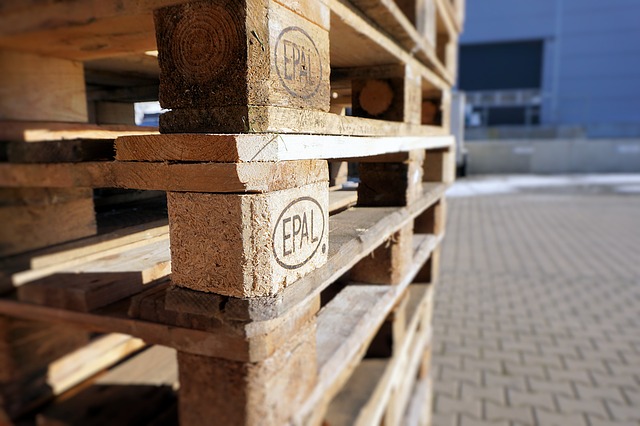
Why choose pallet transport?
First of all, pallets are widely used in road transport in Europe. They can also be used in air freight for express pallet shipments internationally. In that case, make sure the destination country's rules do not prohibit this type of packaging. Some international regulations can be restrictive with regard to pallets, in order to prevent the spread of diseases carried by wood. The pallet must then undergo chemical or heat treatment before it can travel.
Some pallets are painted blue or red. These are pooled pallets, rented out by specialist companies. So if you receive goods on this type of pallet, keep in touch with the shipper to make sure they can collect their pallets.
Good to know!
It is harder to obtain transport offers when the goods to be shipped are not palletised. The pallet is carriers' preferred form of packaging, especially for road hauliers, because it is easy to handle and keeps goods secure.
Also, if you don't have a loading dock and you have a pallet to send, tell the carrier so that they come with a tail-lift truck.
Finally, pallet chartering is not limited to road or air transport. Pallets can also be containerised for sea freight, even though bulk is preferred because it optimises the volume of goods loaded into a single container.
Devis Transport connects you free of charge with carriers that handle pallet transport. You can submit your quote request for your pallet shipments right now via our form.
The pallet, from the 1930s to today
The wooden pallet first appeared in the United States in the 1930s. It was not until the 1970s that French manufacturers adopted it as a new means of handling. Today, France is the European leader in pallet manufacturing, producing more than sixty million units a year.
Carriers require goods to be palletised, as this makes them easier to transport and protects them from impacts. Since the law prohibits an individual from carrying a single package weighing more than 30 kilos, the pallet has made handling heavy parcels simpler. It can be moved more easily with forklift trucks (such as Fenwick) or pallet trucks.
There are several formats. In Europe, the standard format that has become established is 80 by 120 cm. For air freight, aluminium pallets are also used: they are lighter, better withstand extreme temperatures and are non-flammable.
To further reduce weight and fuel consumption, composite pallets began to appear in 2012; they are 35% lighter than aluminium ones.
How do you get quotes for shipping pallets?
You fill in...
...your pallet transport request in two minutes.
We submit...
...your request to carriers.
You receive...
...quotes directly from carriers.