How do you get a competitive freight quote?
First of all, a freight quote is based on an assessment of the cost of handling your shipment. The more precise the information you provide, the quicker and easier it will be for the carrier to assess that cost. Finally, to draw up their transport offer, a carrier will take several factors into account.
Factors to take into account
- the destination
- the quantity
- the type of product transported (dangerous, fragile…)
- the weight
- the packaging (pallets, parcels, crates and containers)
- the volume taken up by the goods
- the dates on which the goods will be available and the desired delivery dates
- and options such as "ad valorem" insurance

Which transport mode is best suited to my shipment?
Factors for choosing your type of transport
To make the right decision, we recommend that you list the following points:
- the characteristics of your freight,
- the packaging and marking of your shipment,
- the places of dispatch and delivery of the goods,
- the dispatch and delivery lead times,
- the weight and volume of your freight,
- the storage period,
- the consignee's requirements,
- the level of security and reliability you need,
- and finally, the budget allocated to transport.
Once you have answered these questions, you will find it much easier to decide which transport mode is best suited to your shipment.
Advantages and disadvantages of each freight mode
| Freight mode | Advantages | Disadvantages |
|---|---|---|
| Air | – Fast – Secure handling – Geographical accessibility – Short pre- and on-carriage – Fast stock rotation – Suited to expensive and sensitive goods | – Costly – Unsuited to mass transport – Some dangerous goods are prohibited |
| Sea | – Economical – Ideal for bulky, dangerous, bulk and low-value freight – Reliability – Safety | – Slow – Handling unsuited to fragile goods – Long pre- and on-carriage – More expensive insurance – Costly packaging |
| Road | – Flexibility – Speed – Suited to European transport – Door-to-door delivery – For all types of goods | – High risk of accidents – Delays due to traffic congestion – Lack of security in transit |
| Rail | – Suited to mass and bulk freight – Reliable even in difficult weather conditions – Economical – For long distances – Safety | – Lack of flexibility – No door-to-door service – Limited and uneven infrastructure in Europe – Long transit times – Dependence on lorries for pre- and on-carriage |
| Intermodal | – Combined rail-road, road-sea and sea-air transport – Loading capacity – Shorter transit times – Lower costs | – Only suited to containers – Dependence on each transport mode – Organisation |
How is an air export quote calculated?
What are the costs of air freight?
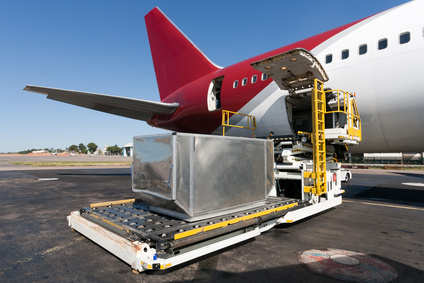
First of all, an air export quote varies according to the weight, volume, destination and nature of the goods transported. The cost of air freight is calculated by multiplying the price per kilo by the chargeable weight, which is the volumetric weight. Calculating the volumetric weight can therefore sometimes lead to a penalising invoice if the goods are light but bulky. In air transport, weight-break pricing also applies, with charges designed to discourage the shipment of small consignments. In addition, prices vary from one country to another.
The "pay for" rule
Finally, to avoid the threshold effect that weight-break pricing can create, the air carrier applies the "pay for" rule (charging at the next weight break when this works out cheaper). This way, the shipper is not penalised when close to a threshold and may pay less by moving up to the next weight break. It is therefore important to check that this rule will be applied to your export quote.
What additional charges apply?
Taxes and surcharges are added to this gross transport cost, for example fuel surcharges, air security surcharges and the air waybill fee. Other costs may also be added to the freight quote, such as premiums for dangerous goods, collection, insurance, the issuing of administrative documents or customs presentation.
How is road transport priced?
To set a road transport rate, the carrier takes into account the weight or the number of parcels, pallets or crates, as well as the distance to be covered. This is why fixed and variable costs form the basis of the transport rate.
Types of costs
1. Fixed costs
First, fixed costs cover overheads, lorry depreciation, insurance and taxes.
2. Variable costs
Next, variable costs relate to running the fleet, such as fuel, maintenance and repairs. Volumetric weight can also affect what you will pay. The ratio used to calculate the volumetric weight of a shipment is as follows: one tonne is equivalent to 3 cubic metres.
Specialised road carriers
Some road carriers specialise: some offer better value for money for local or regional shipments, others for national ones. In addition, many road carriers are family businesses. These offer their customers a more flexible structure, providing personalised or tailor-made transport solutions for shipments of pallets, parcels and crates. Ultimately, it all depends on your expectations and requirements.

How do you read a sea freight quote?
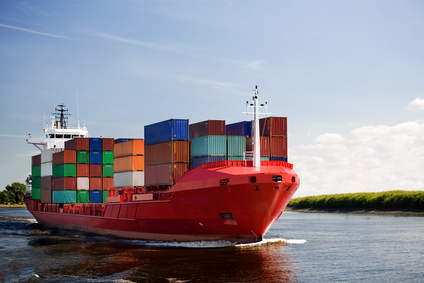
First, the sea freight rate takes into account the nature of the freight transported. However, the price will also depend on the volume the goods take up in the container or in the ship's hold.
How charges are calculated
A minimum charge applies to small shipments, because the cost of sea freight is calculated in freight units. This freight unit (FU) is either the tonne or the volume, and it is always the one that favours the shipping line. Note that 1 tonne is equivalent to 1 cubic metre.
Rates vary from one shipping line to another. Also, ask which container size will be used: there are several sizes suited to different types of shipment, and this determines how the goods are transported.
What charges and surcharges apply?
Finally, various surcharges may apply to a sea freight quote. Below is a non-exhaustive list of surcharges and local charges:
- First, the Bunker Adjustment Factor (BAF)
- Next, the Currency Adjustment Factor (CAF)
- The Congestion surcharge
- The Equipment Imbalance Surcharge (EIS)
- The Low Sulphur Surcharge (LSS)
- The Peak Season Surcharge (PSS), also known as the General Rate Increase (GRI)
- Port dues
- Finally, Terminal Handling Charges (THC)
- …
How do you receive quotes to ship freight?
You fill in...
...your freight quote request in two minutes.
We submit...
...your request to carriers.
You receive...
...quotes directly from carriers.