What are the modes of freight transport in Europe?
Road transport in Europe
Whether you are shipping parcels, pallets or containers, road transport lets you send your goods anywhere in Europe in less than 7 days! To find the best prices for your transport in Europe, submit a quote request using our free form.
Air transport to or from Europe
First, if you need express delivery, air freight is recommended, particularly for importing from or exporting to distant countries. It is the fastest mode of transport in Europe and internationally, but it is also the most expensive! Its price can be up to 10 times higher than shipping by sea. It should therefore only be chosen for shipping high-value goods or goods requiring a high level of security. Europe also has many airports renowned internationally for their freight traffic, such as Paris-Charles-de-Gaulle, Frankfurt, London Heathrow, Amsterdam and Leipzig!
Sea transport to or from Europe
Next, if you want to ship goods economically to or from other continents, sea freight is a suitable solution. It is particularly cost-effective, especially compared with air freight, but it is also very slow. Sea transport accounts for 40% of European freight. Europe has many internationally renowned ports, such as Rotterdam, Antwerp, Hamburg, Amsterdam, Algeciras, Marseille, Bremen, Valencia and Le Havre!
Are there customs regulations for transport within Europe?
European Union member states are not subject to customs duties, so they can ship goods to and receive goods from their neighbours without paying these taxes. Devis Transport lists a large number of freight forwarders specialising in intra-European freight transport. The freight forwarder will organise your transport in Europe and handle the regulatory requirements of each country. Even though there are no customs duties within the European Union, some countries such as Turkey still require additional documents for your shipment to be compliant.
Specific features of the European Union
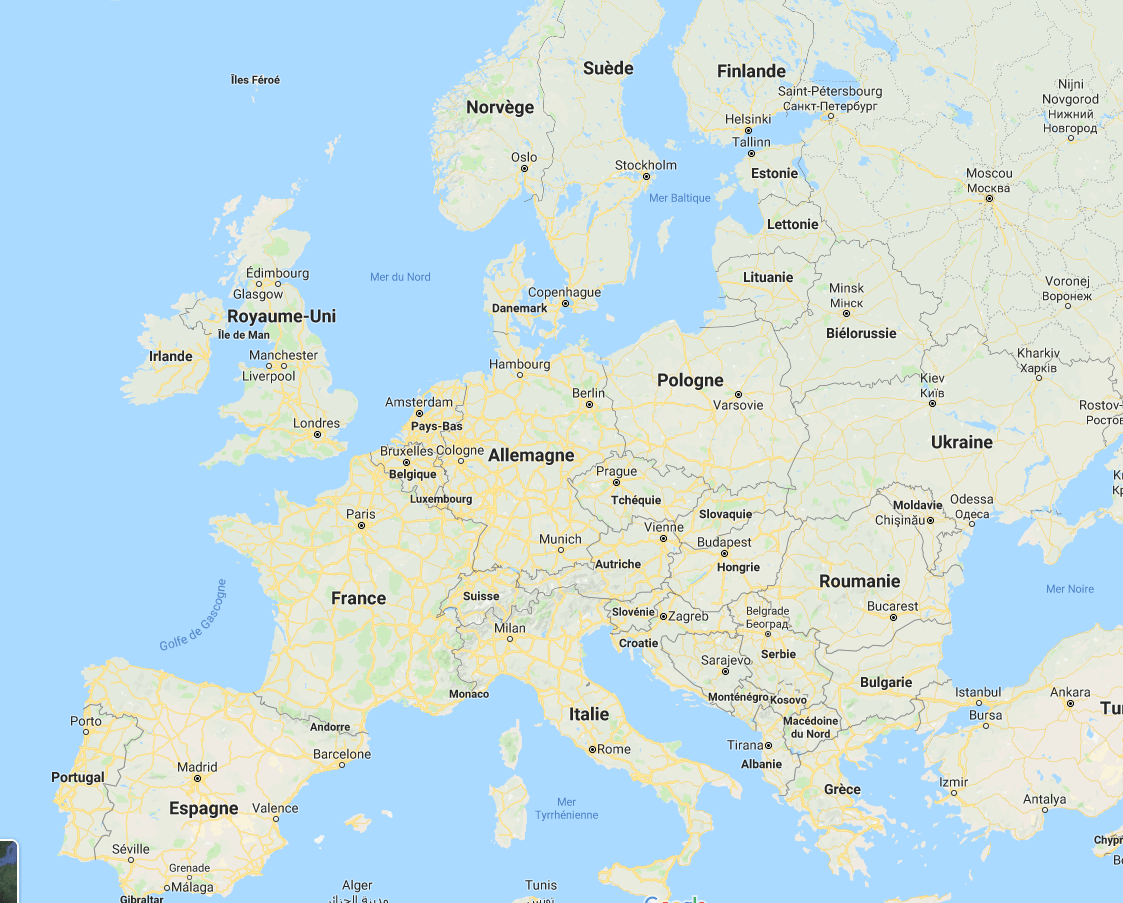
To begin with, the Customs Union was created in 1968 with the aim of harmonising customs duties on goods imported from non-EU countries. The customs authorities of the 28 European Union countries (for the time being, until Brexit is finalised) work hand in hand. The same customs duties apply uniformly to goods imported into these countries from the rest of the world. On the other hand, no customs duties apply to imports and exports from one member state to another.
Moreover, all sales of goods are subject to VAT for shipments within metropolitan France and to European Union countries. Goods exported to the French overseas departments or to countries outside this European zone are not subject to this tax.
There are customs formalities for transporting your parcels or pallets to or from Europe. Here is a list of the main customs documents you will need to carry:
- First, the CN23 customs declaration: it describes the nature, origin and value of the goods carried. It must be accompanied by two copies of the commercial or pro forma invoice.
- The invoice declaration of origin (DOF) : it is made out on the invoice when the exporter is approved by the French Directorate-General of Customs and Indirect Taxes and belongs to a country that has preferential trade relations with the European Union.
- Next, the EUR.1 form: it is drawn up by the exporter and must also be endorsed by the French customs authorities.
- Then, the EUR.2 form: it is drawn up by the exporter, but it does not need to be endorsed by the customs authorities.
- The EUR-MED form: it replaces the EUR.1 form for trade between Switzerland, Norway, Iceland and Turkey, and for trade between European Union countries and the countries of the Mediterranean region: Algeria, the Gaza Strip, Egypt, the West Bank, Israel, Jordan, Lebanon, Morocco, Syria and Tunisia.
- Next, the A.TR form: it is used to transport industrial products from the European Union to Turkey.
- Finally, the Single Administrative Document (SAD): if the parcel or pallet is worth more than €8,000, this document replaces the CN23 customs declaration and invoice.
Which European ports are best suited to sea freight?
With 40% of freight in the European Union carried by ship, ports are strategic hubs for trade. Below is the ranking of the top 15 sea freight ports in Europe:
| Country | Number of containers (million TEU) in 2018 | |
|---|---|---|
| Rotterdam | Netherlands | 14.51 |
| Antwerp | Belgium | 11.1 |
| Hamburg | Germany | 8.73 |
| Bremerhaven | Germany | 5.46 |
| Valencia | Spain | 5.1 |
| Piraeus | Greece | 4.9 |
| Algeciras | Spain | 4.77 |
| Felixstowe | United Kingdom | 4.16 |
| Barcelona | Spain | 3.42 |
| Marsaxlokk | Malta | 3.31 |
| Le Havre | France | 2.88 |
| Genoa | Italy | 2.6 |
| Gioia Tauro | Italy | 2.3 |
| Southampton | United Kingdom | 1.99 |
| Gdańsk | Poland | 1.94 |
What are the main European airports for express transport in Europe?
Below are the top 5 airports ranked by freight volume (2018):
| Airport | Country | Freight volume (tonnes) |
|---|---|---|
| Frankfurt | Germany | 2,176,387 |
| Paris CDG | France | 2,156,327 |
| London | England | 1,771,342 |
| Amsterdam | Netherlands | 1,737,984 |
| Leipzig | Germany | 1,047,490 |
How do you get quotes for all your shipments in Europe?
You fill in...
...your quote request for transport in Europe in two minutes.
We submit...
...your request to carriers.
You receive...
...quotes directly from carriers.