
Where can you find a carrier for Spain?
You can either look them up in directories or use a platform that connects you with carriers, such as Devis Transport. You are then put in touch, free of charge and with no obligation, with several freight forwarders/forwarding agents or carriers. All you need to do is submit a quote request, and you will receive prices for your shipment to Spain.
You can then choose the offer that best suits your needs for all your transport to and from Spain.
Is road transport suitable for shipments to or from Spain?
Yes! If you need to transport goods to or from Spain, for example from Madrid to Paris or from Mulhouse to Barcelona, road transport is THE solution. Road transport to Spain also has the advantage of being economical and offering door-to-door delivery. What is more, even for oversized freight to Spain, such as agricultural machinery, road transport remains the most suitable option.
Whether you are shipping to Madrid, Barcelona, Seville, Valencia, Bilbao, Málaga or Zaragoza, as full or part loads, on pallets or as express parcels, Devis Transport helps you get road transport quotes in just a few clicks. You will then receive offers from various French road carriers serving Spain.

Sea freight to Spain
For cheaper long-distance international transport to or from Spain, you can also choose sea freight. Shipping by sea costs on average 10 times less than by air. However, this mode is much slower than road or air transport. So road or sea transport is the way to go for your goods transport to and from Spain.
What are the transit times between Spain and France?
First of all, Spain is an EU member state and borders France, so delivery times are fairly short. That is why road transport remains the most widely used mode: it is perfectly suited to transporting goods on pallets or parcels, for example.
For documents, the estimated transit time is 1 to 3 working days depending on the destination and the service chosen (express, economy, pick-up point…). For parcels or pallets, transit times are 1 to 4 working days depending on the type of service and the delivery location. These times are, of course, indicative.
Finally, bear in mind the public holidays below to plan the delivery date as well as possible: 1 and 6 January, 1 and 2 April, 1 May, 15 August, 12 October, 1 November, and 6, 8 and 25 December.
What are the customs regulations in Spain?
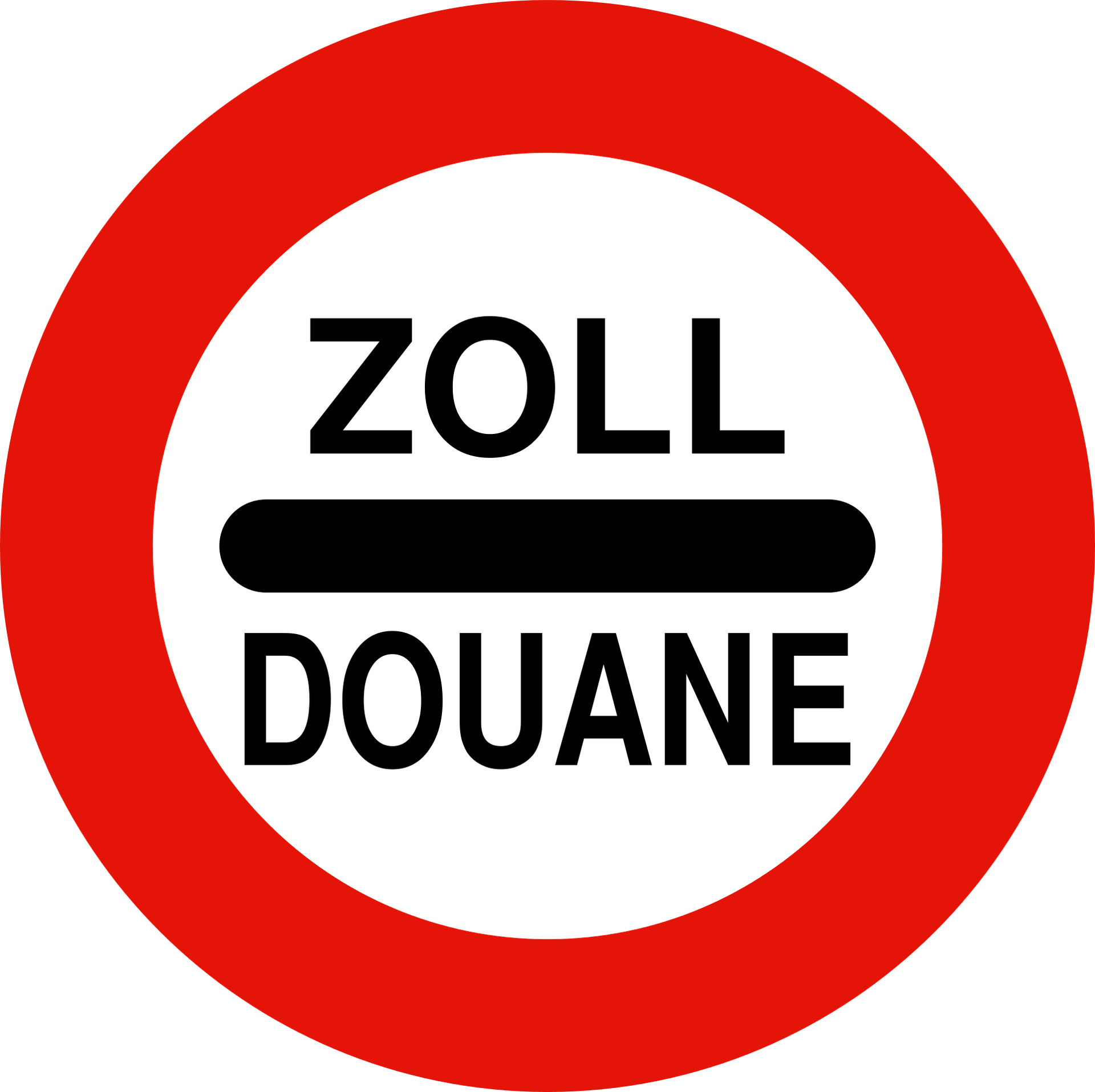
Customs rules within the European Union
As Spain is a member of the European Union, transporting goods to Spain from other member states does not require any customs declarations. Goods therefore move freely.
However, there are exceptions to Spanish customs regulations for the cities of Ceuta and Melilla and for the Canary Islands. If you want to send a parcel or a pallet there, you will need import clearance documents: a commercial invoice (for businesses) or a pro forma invoice (for private individuals) in 5 copies.
Finally, if you import alcohol, cosmetics or car parts, an import licence is mandatory. If the value of your goods exceeds €22, you must also attach a declaration of origin for the transport of your products, stating the country of origin, together with the Single Administrative Document (SAD). If the value of your freight exceeds €6,000, a certificate of origin or EUR.1 is also required.
Customs rules outside the European Union
On the other hand, if you import your goods from a country outside the European Union, they will be subject to Spanish customs duties and taxes. Your parcel or pallet must therefore be accompanied by a pro forma invoice.
To find out more, see our glossary page on customs!
What tips should you follow for a successful goods shipment to Spain?
Before shipping parcels, pallets or containers to or from Spain, here is what you should do:
- First, check for any restrictions on your goods.
- Next, compare your quotes on our website.
- Then, find out about public and national holidays.
- Also, adapt the packaging to the type of product being transported.
- And don't forget to weigh your freight to declare the actual weight, avoiding extra charges from the carrier if the declared weight is lower than the actual weight.
- Make sure you comply with all customs formalities.
- Finally, pass on all relevant information to the carrier or freight forwarder.
How do you get quotes to import from or export to Spain?
You fill in...
...your transport request to or from Spain in two minutes.
We submit...
...your request to carriers.
You receive...
...quotes directly from carriers.