
Shipping dangerous goods
If you want to ship dangerous goods (flammable, corrosive or toxic products), you will need to submit a specific quote request. This way, the carrier can handle your goods in complete safety.
What is more, if the carrier is authorised to transport this type of freight, they will be familiar with the regulations governing the transport of dangerous goods. Note that these regulations are updated every two years. Each set of regulations defines specific procedures according to the mode of transport, and these also depend on the degree of hazard of the goods.
Devis Transport helps you find carriers who can handle the shipment of dangerous goods and substances.
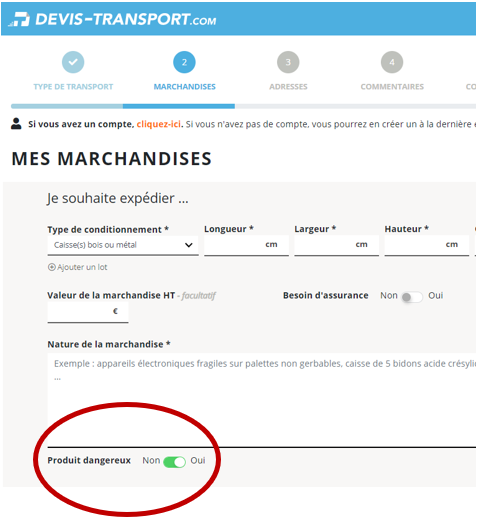
What to do if you are shipping dangerous goods
Once you have chosen your mode of transport, you will need to check the rules that apply to your product. For example, the regulations assign a four-digit identification number known as the UN number. It tells you which measures to take and gives you the product classification, packaging rules, labelling and hazard code.
Your packaging must also be approved under the regulations of the main transport mode for this type of goods.
In addition, the UN has set out requirements for the marking and labelling of dangerous goods. These are intended to inform forwarding agents and consignees (labels and symbols).
Their diamond shape and pictograms are therefore defined by the regulations.
Finally, they must be visible and easy to distinguish from the products.
Regulations by mode of transport
There are different regulations for the transport of dangerous goods depending on the chosen mode of shipment.
For example:
- Sea transport: IMDG (International Maritime Dangerous Goods Code)
- Air freight: IATA (International Air Transport Association)
- Road transport: ADR (Agreement concerning the International Carriage of Dangerous Goods by Road)
- Rail freight: RID (Regulations concerning the International Carriage of Dangerous Goods by Rail)
- And finally, inland waterway transport of goods: ADN
Good to know!
The carrier will most likely ask you to complete a safety data sheet (SDS). This document indicates whether or not the products are classified as dangerous.
Hazard labels must be placed on the packaging, set on point, and be clearly visible. Their minimum size is 100 x 100 mm, and they show the classification of the goods.
The regulations also require the information on the labels to remain legible for as long as the packaging contains the products. For example, for shipping by sea, labels must remain visible after 3 months in seawater.
The 9 hazard classes of dangerous goods you need to know
1: Explosive substances
2: Compressed, liquefied or dissolved gases
3: Flammable liquids
4.1: Flammable solids
4.2: Substances liable to spontaneous combustion
4.3: Substances which are dangerous when wet
5.1: Oxidising substances
5.2: Organic peroxides
6.1: Toxic substances
6.2: Infectious substances
7: Radioactive material
8: Corrosive substances
9: Miscellaneous dangerous substances and articles
How do you get quotes for transporting dangerous goods?
You fill in...
...your transport quote request in two minutes.
We submit...
...your request to carriers.
You receive...
...quotes directly from carriers.